
Insights
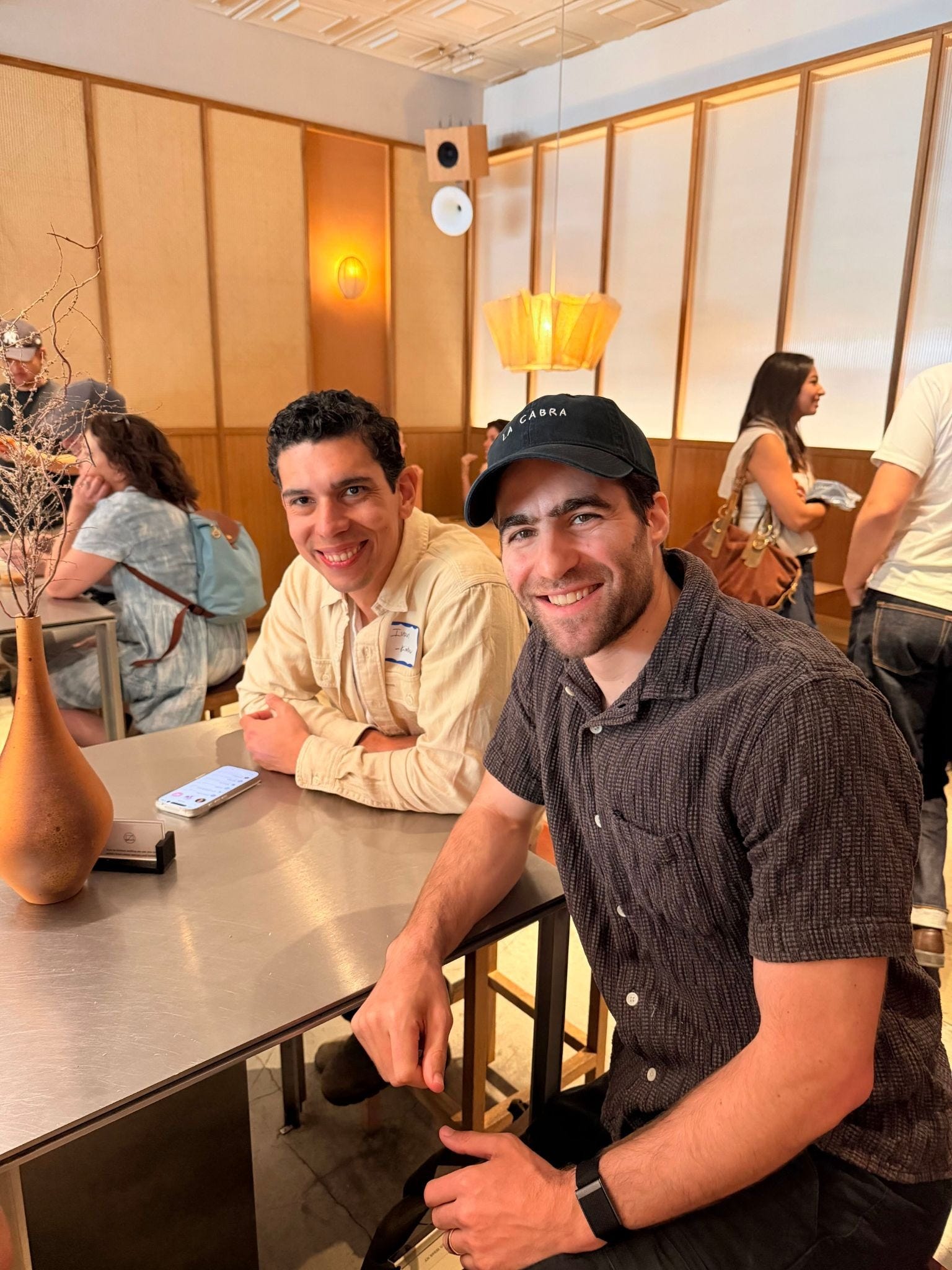
Last week was NYC Tech Week, with hundreds of events from early morning runs in Central Park to late-night parties with people checking their phones periodically to see the Knicks game score. While a lot of the events have a different feel and audience, something consistent was the back-to-back panels, generic networking, and inbox-overload of invitations. We’ve all been there. At Dria, we wanted to try something different, so we co-hosted an event with our portfolio company Kintow at La Cabra in Soho, where founders, VCs, and those in the hospitality industry shared cardamom buns, good coffee, and vibes. There was no agenda. The theme was for hospitality operators and founders building AI for the physical world, and the investors backing them. The room filled up fast. Here are some takeaways from what I heard around the room and throughout the week in New York City.
1. AI Fatigue
People are growing tired of AI-written emails, responses, and blog posts. Someone even asked if my AI agent was going to write this post (rest assured, all human-written). Over the last few years, AI has become embedded in our core workflows at an unprecedented velocity. As we approach AGI, the ability to work faster with higher output only stands to increase exponentially. Naturally, when one uses AI every day, it’s easier and easier to tell when something has been written by it. This can be helpful for semantic tasks, long-form factual documents and code, etc. But when you receive something that should be personal or well thought out, it can seem like a cop out and almost disingenuous. Perhaps we are reaching a tipping point where a well-thought-out email is as special as a handwritten card.
It’s more critical than ever to pick and choose when to use the format and when not to as we communicate with our clients, customers, employees, and other key stakeholders. This is incredibly important in sectors such as hospitality, where the best businesses are built on taste, instinct, and unreasonable attention to detail.
2. AI is worth it, when applied to the right workflows
I spoke with several founders building for hotels and restaurants, and they all emphasized that the industry is operating on razor-thin margins. Historically, restaurants hold about a 5% profit margin¹, and the yearly turnover is extremely high. Hotels are slightly better at about 9%, but labor costs are up 22% since the pandemic². These trends have forced business owners to look at every avenue to squeeze out an inch of extra margin. Those who have integrated new technology into their workflows have greater clarity and can run more effectively. Most importantly, they can give more attention to the crucial piece of their operations, the customer. One manager I spoke with emphasized that it took a while for her to wrap her mind around spending the time to implement AI to speed up her workflows. However, once she started using it, she had massive free time to focus on the creative side of the business – from launching new stores to team building and efficiency. While AI is rapidly changing, the way owners actually service their customers with care, attention to detail, and high-quality products will always be the core of hospitality.
3. A gap in the market exists
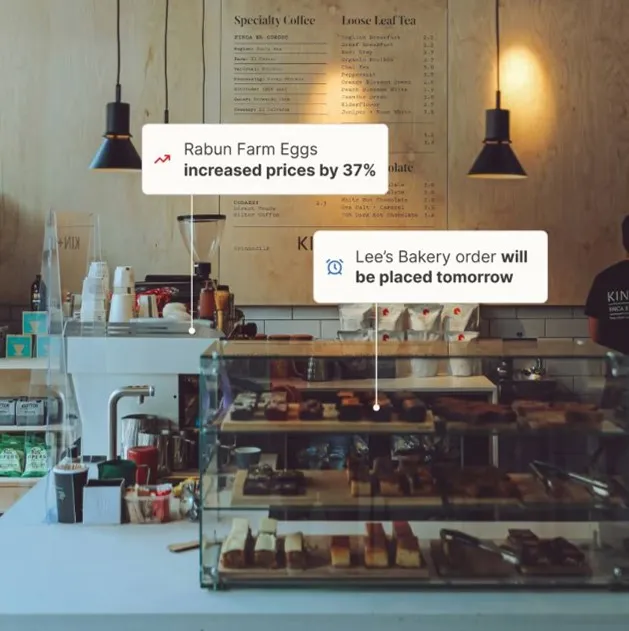
I would like to think our 100+ waitlist was due to people wanting to meet with Dria and / or the Kintow team, but the likely reason is the lack of hospitality events during NYC Tech Week. The demand is a signal that there is a real appetite for how AI will change how we operate in the physical world. The Kintow team saw this when looking for events to attend and decided to make their own. Kintow is building AI co-pilots for hospitality operators. The kind of businesses running on thin margins where every minute of staff time matters. Their early customers aren’t just saving time. They’re seeing margin expansion in an industry where that’s historically hard to come by. I had some conversations with their customers, and one said that they increased their margins by 5% using Kintow for inventory management. Another said that he didn’t need to run home to place a pastry order that afternoon; he knew that his Kintow agent would automatically create and execute the inventory order for him.
The event was a bit of an ‘aha’ moment for me. What’s notable about Kintow’s approach is that it doesn’t try to replace the hospitality experience; it protects it. By handling the operational layer (ordering, logistics, routine decisions), Kintow gives restaurant and coffee shop operators back the one thing they can actually compete on: employees’ presence with guests. I believe that companies like this – that address labor shortages while improving human interactions – will be the ones to sustain ROI long term.
Sources
1. Your Complete List of Restaurant Industry Statistics (2025)
2. Hotel Profitability: Margins, Metrics & Strategies